





Sa Calobra y Torrent de Pareis
07 · Mallorca beach · Serra de Tramuntana
Sa Calobra and the mouth of Torrent de Pareis form one of Mallorca's most recognisable geological landscapes. The visit is spectacular but takes time: the road, parking, pedestrian tunnels and crowds shape the experience as much as the beach itself.
- Natural monument
- Pebbles
- Tramuntana
- Best for
- Geological scenery and a dramatic sightseeing visit
- Access
- Mountain road or boat; pedestrian tunnel to Torrent de Pareis
- Parking
- Parking in Sa Calobra; high demand
- Services
- Services in Sa Calobra; the river mouth is natural and has no added beach services
Two places that are worth distinguishing
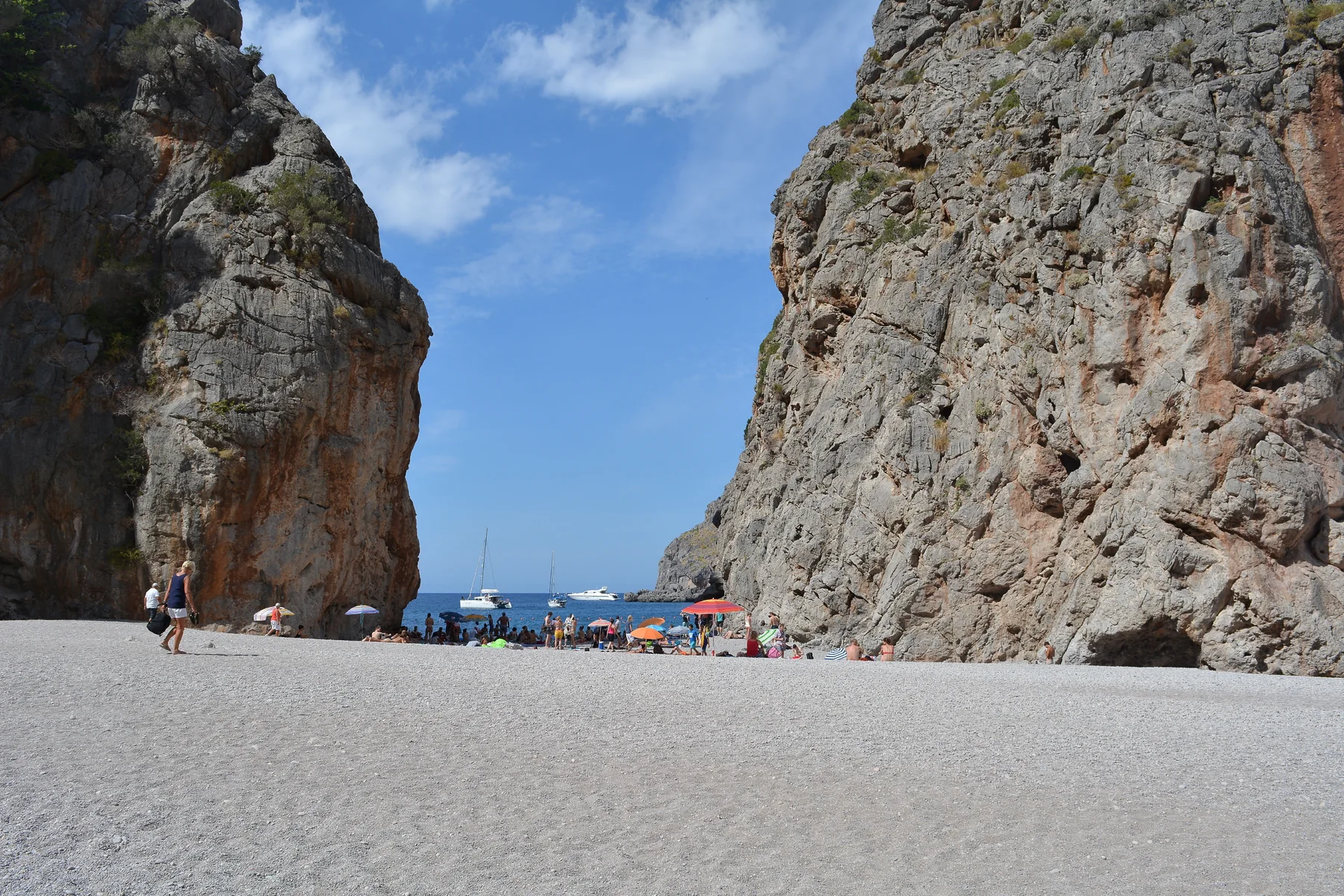
Sa Calobra is the small coastal settlement reached by road and boat. From there, a walkway passes through tunnels cut into the rock to the mouth of Torrent de Pareis. Many images present the whole setting as if it were a single beach, but the experience includes the harbour, the pedestrian route and the large rocky amphitheatre at the end.
The beach at the river mouth consists mainly of pebbles. The main appeal is the scenery, not comfort for lying down or entering the water. Footwear that handles stones well and a light load make the visit much easier.
Arriving by road or by sea
The Sa Calobra road is narrow, winding and very popular. It requires attentive driving, patience around coaches and cyclists, and enough time for the return. It is not ideal for anyone uncomfortable on mountain roads. Parking in the settlement is regulated and can fill up.
Arriving by boat from Port de Sóller avoids the drive and gives another perspective on the coast, but it depends on schedules and sea conditions. Check the day's operation and allow enough time to reach the departure point; it is not equivalent to a frequent urban transport link.
Swimming, services and weather
Services are concentrated in Sa Calobra. At the torrent mouth there is no beach infrastructure comparable to an urban sandy beach. The water can deepen quickly and waves enter between the cliffs; caution should increase when no visible surveillance is present.
The Torrent de Pareis catchment responds to rainfall. Even if the mouth looks dry, do not start a route through the channel without experience, a weather forecast and knowledge of the itinerary. A tourist visit to the beach is not the same as undertaking the full torrent crossing.
How to avoid a rushed visit
The combination of mountain road, parking and walking makes Sa Calobra an excursion rather than a quick stop. Arriving before the busiest hours lets you walk through the tunnels more calmly and see the site before it fills.
If you have additional time, Cala Tuent offers a different and less monumental landscape. Adding it only makes sense if driving time and daylight allow it; forcing both stops late in the day can turn a scenic route into a stressful experience.
When to go and who it is not for
Best time: Early morning or shoulder season; avoid squeezing the visit between commitments with little time to spare.
Not the best choice for: Anyone expecting fine sand, quick access or a conventional beach day with shade and services beside the water.
Safety: The river mouth is pebbly and enclosed by rock walls. Check sea and weather conditions; do not enter the torrent after rain or when flash flooding is possible.
Practical questions
Is the Torrent de Pareis beach sandy?
No. Pebbles dominate, so footwear and entry into the water require more care.
Is it better to go by car or by boat?
The car gives timetable freedom but involves a mountain road and parking; the boat avoids driving but depends on schedules and sea conditions.
Can you walk through Torrent de Pareis?
The full crossing is a demanding activity and different from visiting the mouth. It should not be attempted without experience, planning and safe weather.
Last editorial review: 2026-11-20. Access, services and restrictions may change; check them before travelling.