




Cala Mesquida
06 · Mallorca beach · Llevant
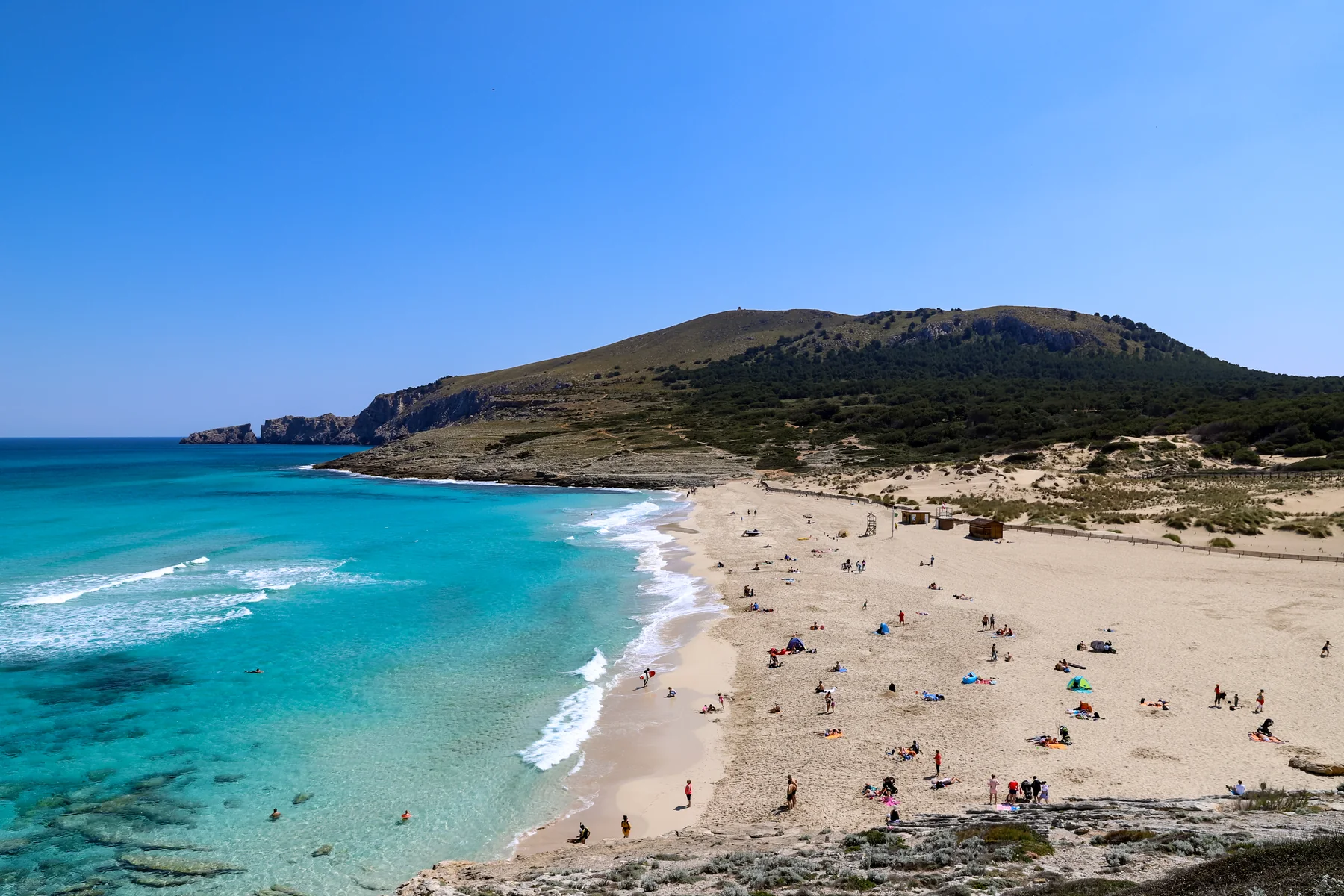
Cala Mesquida stands out for the width of its sandy beach and a dune system that extends inland. Its open, bright character is very different from the narrow coves of the southeast; that same exposure means wind and waves need to be taken seriously.
- Dunes
- Open sandy beach
- Protected landscape
- Best for
- Dunes, open space and a natural setting
- Access
- Access through the Cala Mesquida settlement
- Parking
- Urban parking; high occupancy in season
- Services
- Seasonal services nearby
Open beach and dune landscape
Cala Mesquida occupies a broad bay in northeastern Mallorca. The sand continues inland into a system of dunes and low vegetation that accounts for much of its visual character. It is not isolated — there is accommodation and services in the nearby settlement — but the transition between beach and natural landscape remains clear.
The width allows visitors to walk and spread out better than in a small cove. Even so, the easiest access points and areas near services attract the most people. To understand the place, move a little away from these points without leaving the boardwalks or creating new tracks across the dunes.
Access, parking and services
The road reaches the Cala Mesquida settlement. Parking is urban and spaces become scarce quickly in summer. Once parked, the pedestrian access is signposted and does not require a long hike, although there may be slopes or boardwalks depending on the point.
In season there are restaurants, lifeguards and beach services. Outside it, the offer drops considerably. Carry water and sun protection at any time of year because natural shade beside the sand is limited.
How to read the sea conditions
The beach is exposed to wind and can change from calm water to uncomfortable waves. Photographs of turquoise water do not describe every day. Before entering, check the flag, watch the currents and keep children close on rougher days.
Days with strong sea conditions can still be attractive for walking and enjoying the landscape, but not for swimming. Changing the plan does not waste the visit: Capdepera, Cala Ratjada and nearby trails offer alternatives.
Protecting the dunes and walking
Boardwalks are not decorative: they channel foot traffic so vegetation can hold the sand and the dune system does not fragment. Avoid climbing dunes, placing parasols on vegetation or cutting across on shortcuts.
Cala Mesquida can also be a starting point for coastal walks, but the trails require water, footwear and an assessment of the heat. A nearby cove on the map does not necessarily mean a short or easy walk.
When to go and who it is not for
Best time: Early morning for walking and choosing a spot; moderate-wind days for a more comfortable visit.
Not the best choice for: Anyone seeking a completely sheltered cove or unwilling to check sea conditions before swimming.
Safety: Exposed beach. Waves can be significant and the flag should determine whether swimming is appropriate, especially with children.
Practical questions
Does Cala Mesquida often have waves?
It can because of its exposure. Conditions vary with the wind; the flag and local observation are essential.
Are there services and lifeguards?
During the main season there are usually services, but availability and hours should be checked, especially outside summer.
Can you walk on the dunes?
Only designated routes should be used. Walking freely over dunes damages vegetation and accelerates erosion.
Last editorial review: 2026-11-20. Access, services and restrictions may change; check them before travelling.