The Serra de Tramuntana: villages, terraced landscapes and mountain roads

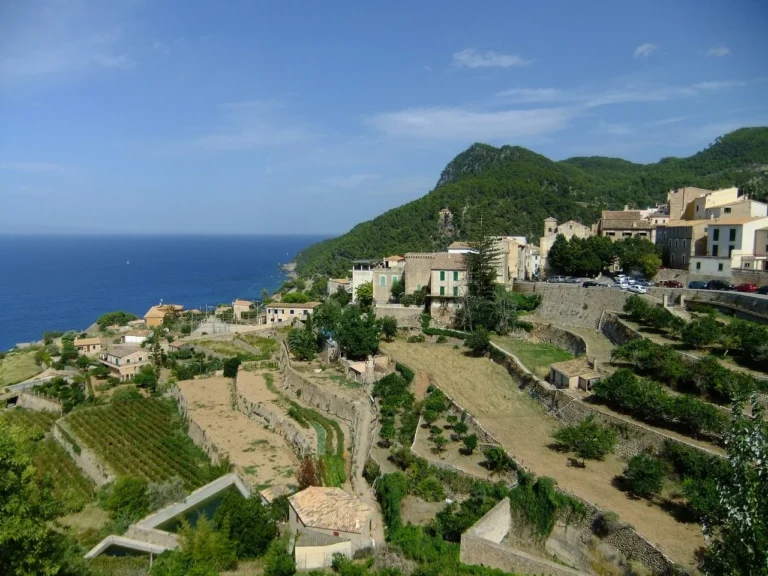
The Tramuntana landscape was shaped over centuries by terraced fields, dry-stone walls, irrigation systems, olive groves and villages set between mountains and sea. Choose a few stops and explore on foot. Here, travel times tell you more than distances on a map.

Revised editorial content on 11 November 2026

LANGUAGEInhabited mountain

In 2011, UNESCO recognized the value of a landscape where human intervention — banks, roads, water and crops — is part of what is protected.

RITMODon't try to see everything.

The Ma-10 connects much of the mountain range, but curves, viewpoints and seasonal traffic mean that an overly ambitious route ends up being a succession of car parks.

KEYPeople and territory

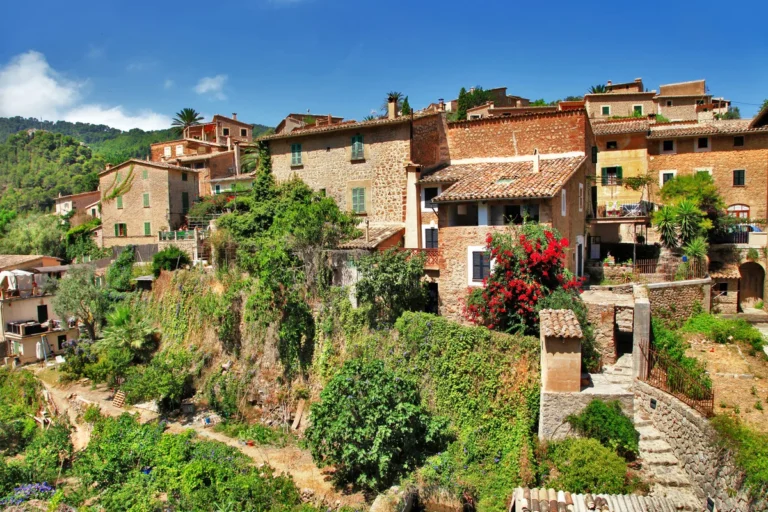
Valldemossa, Deià or Sóller have their own identity; Lluc, Cúber, Banyalbufar or Fornalutx add landscape, heritage and another way of understanding the mountains.

A mountain range that organizes the northwest of Mallorca

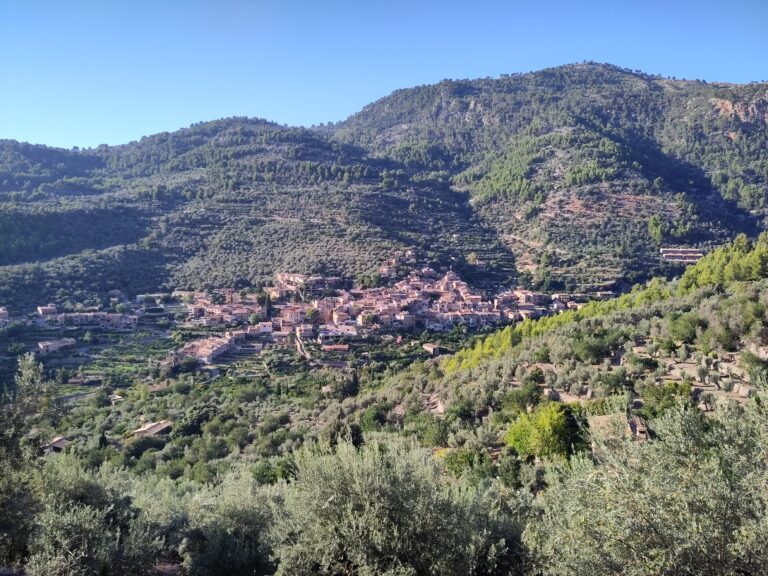
The Serra de Tramuntana runs north-west of Mallorca from the Andratx environment to Pollença and concentrates the highest heights of the island. However, their interest is not only in summits. What makes this territory unique is the relationship between relief and human life: agricultural terraces supported by dry stone, ditches, paved roads, possessions, olive groves, citrus and small nuclei that adapted to very strong slopes.

This balance explains why UNESCO registered it as Cultural Landscape. The visitor who only looks for viewpoints stays with a part of the story; walk through a stretch, enter a village and observe how the water is used or how a bench is organized tells much more about the mountain range than any photograph.

Where to start: villages and landscapes that are not interchangeable

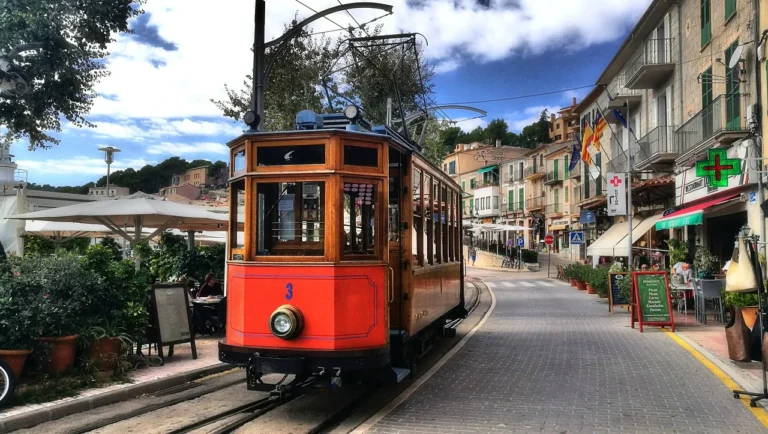
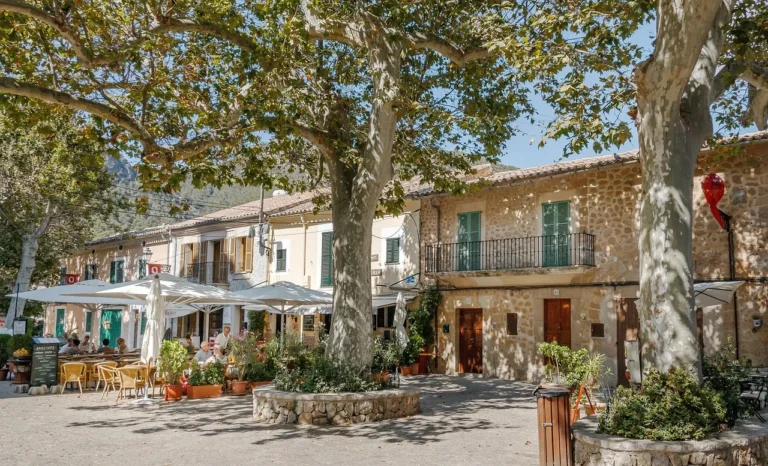
Valldemossa combines heritage, Cartuja and access to mountain paths. Deià has a smaller scale, a strong relationship with artists and writers and an abrupt coastline. Sóller It functions as an inhabited, agricultural and urban valley, connected to the Port de Sóller. Fornalutx allows to read very well the adaptation of the people to the slope. Further west, Banyalbufar and Estellencs show a particularly visible relationship between agricultural terraces and sea.

To the north, Lluc, Escorca, Cúber and the large reliefs completely change the tone: less village and more mountain, forest, reservoirs and roads. There is no single “Tramuntana Day”; there are several Tramuntanas and it is worth deciding which one you want to know.

How to travel without turning the trip into a race

By car, the Ma-10 is the great landscape spine, but it is convenient to plan for stages. A day between Valldemossa, Deià and Sóller is very different from one dedicated to Lluc, Cúber or Pollença. Parking can be complicated in season and some accesses are quickly saturated.

To walk, the GR 221 or Pedra Route in Sec articulates an important part of the mountain range and allows linking old roads. There is no need to make a great stage: small tours around Valldemossa, Deià, Sóller or Lluc already allow you to understand the logic of the territory. There are private farms, closures and sections with variable difficulty; the signage and the status of the route must be checked before leaving.

Eating, sleeping and living the Tramuntana

Experience changes a lot if you sleep in the saw. When most visitors of a day disappear, the villages recover a more daily rhythm. Small accommodations, village houses, historic hotels and mountain shelters allow you to choose between urban comfort and direct contact with the landscape.

To live permanently, the attractions —landscape, tranquility, local identity — are accompanied by real conditioning: winding roads, limited parking, humidity, orientation, maintenance of walls and benches and greater restrictions on certain works. The saw works best when it is understood as inhabited territory, not as a tourist decoration.

A better way to know the area

The best visit to Tramuntana usually includes fewer stops than planned. Choosing two villages, a walk and a meal with time almost always offers a better experience than trying to tour the whole mountain range in a day.