


Deià

Pueblos de Mallorca

History

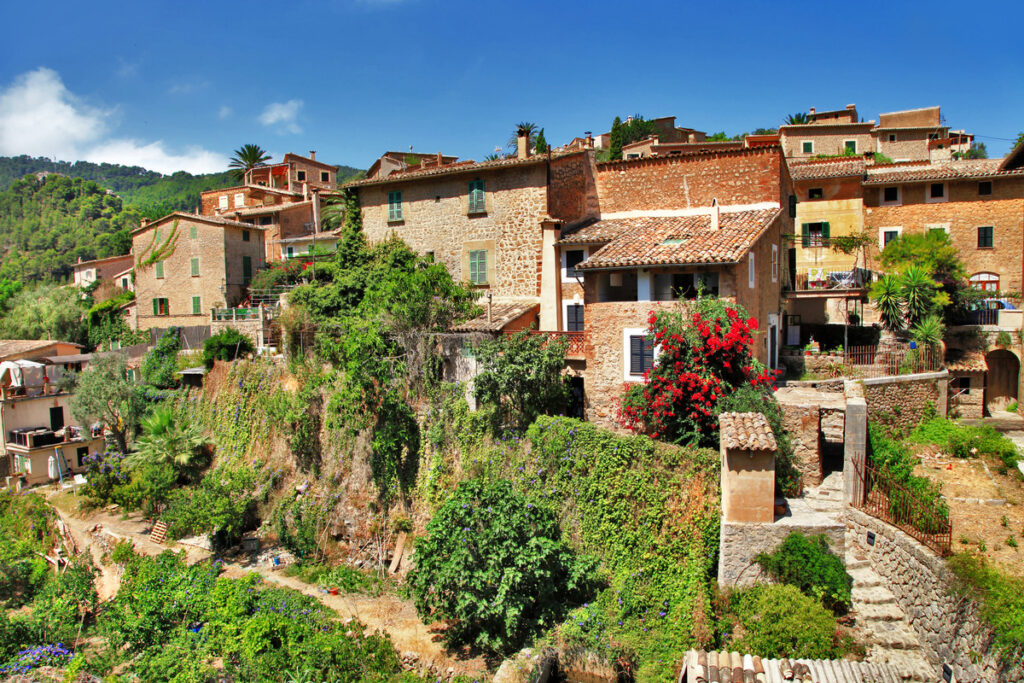
Deià sits in a steep valley opening onto Mallorca’s northwest coast. Its name recalls the island’s Islamic period: daia meant a village or hamlet. Terracing, irrigation channels and drains made it possible to farm these steep slopes. They still shape the landscape today.

After the Christian conquest in 1229, Deià became part of the territory of Valldemossa. For centuries, olives, citrus fruit, livestock, fishing and woodland supported local livelihoods. Stone buildings, retaining walls and paved paths show how people adapted to the terrain.

Artists, writers and musicians began to settle here in the late 19th century, with more arriving in the 20th. Robert Graves moved to Deià in 1929 and spent much of his life at Ca n’Alluny. The village’s association with writers and artists is still very much in evidence.

Culture and heritage

Deià belongs to the Serra de Tramuntana Cultural Landscape, inscribed by UNESCO in 2011. Its dry-stone terraces, water channels and hillside homes show how generations have lived and farmed on steep ground.

At the top of the village, Sant Joan Baptista church stands beside the small cemetery where Robert Graves is buried. His house, Ca n’Alluny, preserves his living and working spaces. At Son Marroig, an estate associated with Archduke Ludwig Salvator, there are striking views towards Sa Foradada.

Deià’s narrow streets are home to a small community as well as a popular destination. Walk through the village, keep private driveways clear and respect the stone walls and residential lanes.

deia cultura

What to see and do

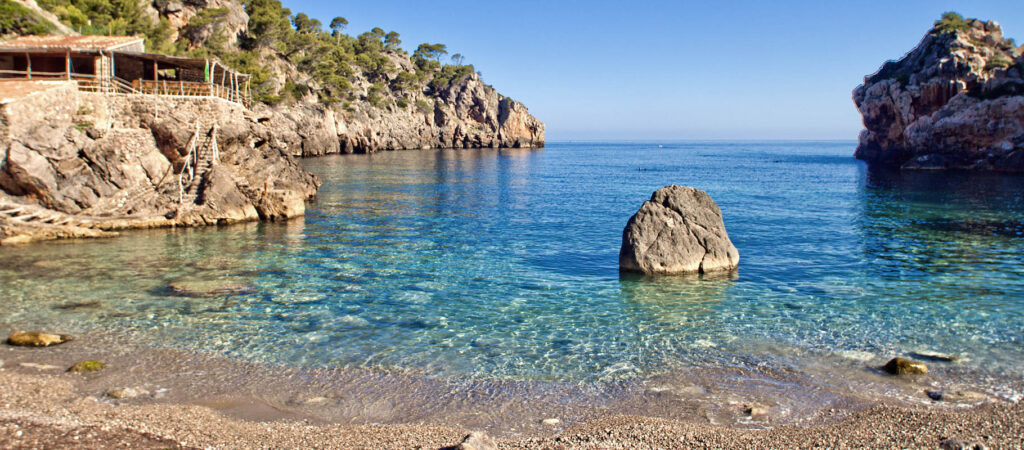
Cala Deià: this small, rocky, pebbly cove sits below cliffs. Parking and space on the shore are limited, particularly in season. Plan ahead and avoid the busiest hours.

Robert Graves’s house: at Ca n’Alluny you can see where the writer worked and how he lived in Deià.

Son Marroig and Sa Foradada: visit the estate for views of the Tramuntana coast and to explore Archduke Ludwig Salvator’s connections with the landscape.

The village and church: the climb to Sant Joan Baptista and the cemetery leads through the historic centre, with views over the valley and the sea.

Walking: local paths lead through olive groves and woodland and along the coast. Follow signs and closures, respect private property and choose a route suited to the weather.

Accommodation and daily life

Accommodation is limited to a relatively small number of hotels, village houses and rural stays. Book ahead in high season and check access and parking arrangements for the property you choose.

Living in Deià

Deià is much smaller than Palma. The streets can be narrow and steep, shops are fewer, and visitor numbers rise sharply in summer. Residents also have a close-knit community and direct access to the mountain landscape.

Before renting or buying, look at road access, parking, orientation, damp and the upkeep of dry-stone walls and terraces. Check what alterations or extensions are permitted in this protected setting.

deià mallorca

Cala Deià

At Cala Deià, rock and pines surround a small cove of deep, clear water. Pebbles and rock ledges line the shore, with fishing huts behind them. In season, there is seafood by the water. Come for a swim on a calm day, or stay to watch the changing light.

Getting there and practical tips

A narrow local road descends to Cala Deià, and paths also lead down from around the village. Parking is very limited and access arrangements can change seasonally, so check the current rules before driving down.

Arrive early or outside peak summer hours if you can. Wear shoes suitable for pebbles and rock, keep access routes clear and respect the working spaces of fishers and residents.

LOCAL HOUSING INFORMATION

Housing in Deià

Municipal figures give a general picture of the market. Averages cannot value an individual home or distinguish between neighbourhoods.

SALE

Homes for sale

Regional 10,868 €/m² 2025
Fotocasa 8,055 €/m² October 2026

Each source uses its own period and methodology. Figures are shown separately.

RENT

Homes for rent

Official 6.06 €/m²/month 2024
Fotocasa 19 €/m²/month October 2026

Each source uses its own period and methodology. Figures are shown separately.

Local editorial information reviewed on 11 de November de 2026. Each source states the period covered by its market figures.

Start typing and press Enter to search