


Calvià

Beyond the resorts of the southwest coast, Calvià includes inland villages and archaeological sites as well as marinas, residential districts and some of Mallorca’s most expensive housing markets. The municipality covers places with very different characters, so it helps to choose which part you want to visit.

Local editorial content revised November 11, 2026.

From Prehistory to the Conquest of 1229

Archaeological sites across Calvià record settlement dating back to prehistoric times. Puig de sa Morisca, above Santa Ponça, is particularly rich in evidence of successive settlements and trade contacts.

During Mallorca’s Islamic period, the area formed part of the island’s Muslim administration. On 10 September 1229 Jaume I’s forces landed at Santa Ponça, a decisive moment in the Christian conquest. Calvià and Es Capdellà took shape as settlements during the Middle Ages.

Calvià Vila and Es Capdellà: the interior of the municipality

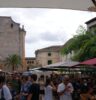
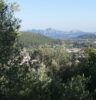
Inland at Calvià Vila, the church of Sant Joan Baptista, village streets and surrounding hills offer a different view of the municipality. Nearby Es Capdellà is smaller still and gives access to paths in the foothills of the Tramuntana.

Visit the villages as well as the coast to see how much of Calvià changed when seaside tourism developed rapidly in the second half of the 20th century.

Santa Ponça and Puig de sa Morisca

Santa Ponça has a broad beach, harbour and residential districts as well as its resorts. The archaeological park at Puig de sa Morisca offers a glimpse of its earlier history that is easy to miss from the promenade.

Explore the remains of the prehistoric settlement and see how its position commands this stretch of coast. The wider landscape is also closely associated with Jaume I’s landing.

Portals, Palmanova, Magaluf and Peguera

Portals Nous and Bendinat are known for their marinas and upmarket homes. Palmanova combines beaches and everyday services, while Magaluf has a large concentration of hotels and entertainment. Santa Ponça mixes residential areas and resorts. Peguera and Cala Fornells lie further towards Andratx and the Tramuntana.

Choose a base according to what matters to you: a short journey into Palma, the beach on your doorstep, access to a harbour, sport, nightlife or the quieter pace of a village.

Living in Calvià

Housing in Calvià Vila or Es Capdellà is a different proposition from a property in Portals Nous, Bendinat or Santa Ponça. Palmanova and Peguera have their own markets too. Prices, demand and the types of home available vary considerably.

Check the journey to Palma, seasonal traffic, parking, winter services and shared costs. A detached property may also involve maintaining a plot, pool and outbuildings. If holiday letting is essential to a purchase, verify that the specific property can legally be used for it before committing.

Photo: Liilia Moroz · CC BY-SA 4.0 · Wikimedia Commons

LOCAL HOUSING INFORMATION

Housing in Calvià

Municipal figures give a general picture of the market. Averages cannot value an individual home or distinguish between neighbourhoods.

SALE

Homes for sale

Regional 5,660 €/m² 2025
Official 6,288 €/m² 2025
Fotocasa 6,701 €/m² October 2026
Idealista 7,595 €/m² October 2026

Each source uses its own period and methodology. Figures are shown separately.

RENT

Homes for rent

Official 12.27 €/m²/month 2024
Fotocasa 22 €/m²/month October 2026

Each source uses its own period and methodology. Figures are shown separately.

Local editorial information reviewed on 11 de November de 2026. Each source states the period covered by its market figures.

Start typing and press Enter to search