





Es Trenc
01 · Mallorca beach · Migjorn
Es Trenc is not a compact cove but a broad open beach between dunes, salt flats and the sea. Its value lies precisely in this relatively undeveloped landscape; enjoying it properly means choosing the right access point and accepting that parking, walking and finding shade are part of the visit.
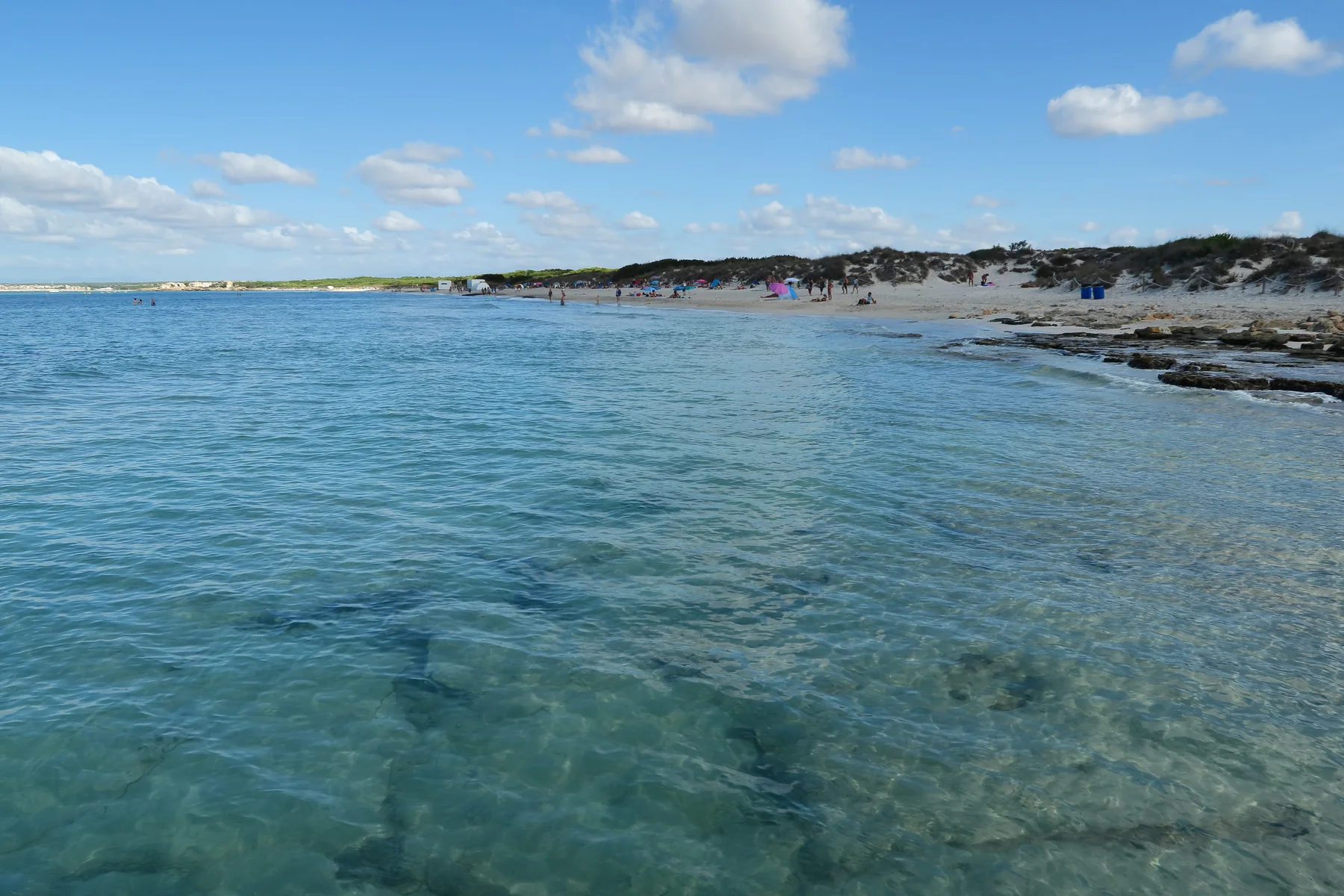
- White sand
- Natural park
- Dune landscape
- Best for
- Natural scenery, long walks and swimming on an open sandy beach
- Access
- Access via Ses Covetes or sa Ràpita/Colònia de Sant Jordi depending on the sector
- Parking
- Regulated paid parking in season; check the access you plan to use
- Services
- Vary by sector and season
What makes Es Trenc different
The best-known image of Es Trenc — pale sand and clear water — tells only part of the story. The beach forms part of the Es Trenc-Salobrar de Campos maritime-terrestrial natural park, where the beach, dunes, wetlands and salt flats function as one system. The experience changes depending on where you arrive: some sectors are closer to settlements and services, while others feel much more like open coastline.
It is not best treated as a cove to “see in twenty minutes”. Its length invites you to walk, find a less concentrated section and watch the coastline change. That openness also means greater exposure to sun and wind, so a day here requires more preparation than a visit to an urban beach.
Which access point to choose
The usual access points are spread between the Ses Covetes and sa Ràpita area, the central sector and the approach from Colònia de Sant Jordi. They do not offer the same walking distance, parking availability or proximity to services. Before setting off, decide what matters most: convenience, a more natural setting or closeness to a settlement.
The final approach should use designated paths and boardwalks. Crossing the dune belt elsewhere accelerates erosion and damages the vegetation that stabilises the sand. Access restrictions and parking management can vary by season, so the specific route should be checked on the same day through official or municipal information.
Parking, services and planning
In high season, regulated car parks can fill early and are often paid. Arriving early reduces time spent searching and helps avoid ending up in unauthorised parking areas. Do not expect to leave the car beside the sand: depending on the sector, you may need to walk several minutes while carrying everything you need.
Services are not uniform along the beach. There are more options near the ends and main access points; the more natural stretches are deliberately more basic. Water, sun protection, a well-secured parasol and a bag for taking all rubbish away are sensible even for a short visit.
How to enjoy it without degrading it
Es Trenc works best when its protected status is taken seriously. Do not walk or set up on the dunes, remove vegetation, leave cigarette ends or abandon rubbish. Swimming should follow the flag and sea conditions: on an open beach, wind can quickly change a morning that initially looks calm.
For a fuller visit, the swim can be combined with Colònia de Sant Jordi or the salt-flat landscape, but without turning the day into a race between stops. The main interest is the coastline itself and the transition between sea, sand and wetland.
When to go and who it is not for
Best time: Early morning or late afternoon; the landscape is easier to appreciate outside the busiest days.
Not the best choice for: Anyone looking for natural shade, immediate access from the car or a small sheltered cove.
Safety: Open and exposed beach. Respect the flags, keep off the dunes and do not assume the water will always be calm.
Practical questions
Is Es Trenc suitable for families?
Yes, if you choose a sector whose access and services suit the children's ages. The lack of shade and the walking distances require preparation.
Can you park for free next to the beach?
Do not assume so. The main access points use regulated or more distant parking, and conditions vary by season.
What is the difference between Es Trenc and Ses Covetes?
Ses Covetes is one of the settlements and access areas nearby; Es Trenc is the larger beach-and-dune system extending across several sectors.
Last editorial review: 2026-11-20. Access, services and restrictions may change; check them before travelling.