

Mallorca: what it has been, what it is

Mallorca was not born as a destination: it was born as a crossroads. Its stone bears witness to the layers of Mediterranean history—talayots, Roman roads, Islamic orchards, Gothic cloisters, lateen sailing ports—and a stubborn idea: to make the geography habitable. The mountain was tamed with stone walls and irrigation ditches; the plain, with mills and threshing floors; the coast, with towers and lighthouses. For centuries it was a warehouse, workshop, and port of call: oil, salt, wine, fabrics, nautical charts, knowledge traveling from one shore to another. It also attracted travelers: humanists, cartographers, artists, naturalists. The island could be read, but it was never exhausted.

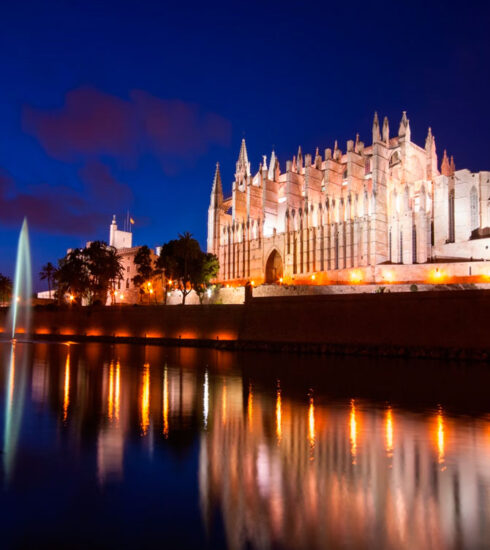
Today, Mallorca is a Mediterranean capital that naturally combines heritage and contemporary life. Palma pulsates as a city of golden stone and sea light; the Tramuntana mountains offer a unique cultural landscape; the interior maintains markets and crafts; the coastline alternates between traditional ports and crystal-clear coves. The table encapsulates that memory—oil, almonds, orchards, sea—while today’s wineries and kitchens converse with tradition. The island has become a laboratory of hospitality and a creative platform: design, music, literature, photography; a place where different languages and perspectives find time and rhythm.

To the world, Mallorca offers methods rather than promises: how to care for the landscape by working with it (not against it), how to make cultural diversity the norm, how to sustain a way of life that values light, reasonable silence, conversation, and shared meals. It is an archipelago of useful ideas: dry stone walling techniques, a culture of water scarcity, the protection of Posidonia seagrass as an ally of the sea, and a local economy that welcomes visitors without losing its roots.

Mallorca, in short, is memory in use: a place that has learned to update its legacy without disguising it. For those who arrive, it offers an invitation that is both simple and demanding: to look slowly. Because here, time is not filled; it is lived.

Mallorca, scenic and cultural treasures waiting to be discovered

An island is best understood through its landscapes. Six areas, six ways to view it. Choose the one that suits your mood today and let the map do the rest.

Palma

Golden stone port city: Gothic architecture overlooking the sea, shaded courtyards, and lively neighborhoods. Urban rhythm, art, market, and promenade.
Includes: historic center, Santa Catalina, La Lonja, Bellver, Portixol–Molinar.

Serra de Tramuntana

Cultural mountain: dry stone walls, terraces, and viewpoints that explain how the slope was tamed. Hanging villages and cornice lighting.
Includes: Andratx, Estellencs, Banyalbufar, Valldemossa, Deià, Sóller, Fornalutx, Lluc, Sa Calobra, Pollença.

Raiguer

A corridor between mountains and bays: wineries, wholesale markets, and trades that still perfume the squares. A perfect transition from the mountains to the north.
Includes: Marratxí, Santa Maria, Consell, Binissalem, Inca, Selva, Caimari, Campanet, Sa Pobla, Alcúdia.

Pla de Mallorca

A wide and serene interior: windmills, chapels on low hills, and an agricultural landscape that marks the calendar. A clear horizon and stone villages.
Includes: Sineu, Petra, Montuïri, Porreres, Vilafranca, Llubí, Ariany, Maria de la Salut, Muro.

Llevant

Eastern area of coves and gentle mountains: caves, coastal castles, and lighthouses that write with light. Natural harbors and pine forests stretching down to the sea.
Includes: Manacor, Porto Cristo, Artà, Capdepera, Cala Ratjada, Canyamel, Son Servera, Cala Millor, Font de sa Cala.

Migjorn

Clear southern salt flats and sand dunes: dunes, posidonia, and straight horizons. Golden stone villages and lighthouses that close the day.
Includes: Llucmajor–Cap Blanc, Campos–Es Trenc, Ses Salines–Colònia de Sant Jordi, Santanyí, Cala Figuera, Cala Santanyí, Felanitx–Portocolom, Sant Salvador.