


Campos

To understand Campos, start inland. Its flat terrain, reddish soil, livestock, windmills and towers have shaped the municipality and its farming economy for centuries. Es Trenc is now its best-known sight abroad, but the identity of Campos took shape long before the coast became a holiday destination.

Local editorial content revised November 11, 2026.

A town founded to serve its agricultural hinterland

Campos took shape as a town in the early 14th century. Its flat land suited crops and pasture, and for centuries this was one of southern Mallorca’s main farming and livestock districts. Farms still shape much of the surrounding landscape.

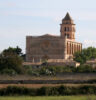
The church of Sant Julià, the convent of Sant Francesc de Paula, the oratory of Sant Blai, towers and stone boundary crosses all belong to a town whose history is closely tied to its fields.

Cattle, milk and a farming tradition

Campos was once a major centre for cattle farming. Dairying, food production, building materials and small workshops helped sustain its economy. It remains a working town as well as a place to live.

The local market and shops keep the centre connected to the farming country that begins just beyond its streets.

Es Trenc and Salobrar, a coastal landscape shaped by salt

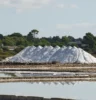
Es Trenc is one of Mallorca’s long sandy beaches. Behind it lie dunes, wetlands and the Salobrar de Campos, where salt is harvested in one of the island’s most important areas for birdlife.

The natural park protects the beach, dunes, salt marshes and wetlands as well as the waters offshore. A walk away from the shoreline reveals how much lies beyond the sand.

Sa Ràpita and Font Santa

Sa Ràpita shows a different side of the municipality. This residential settlement on the coast developed quite differently from Campos town and lies close to the shores of Es Trenc.

Nearby Font Santa is known for its thermal waters, another feature of southern Mallorca’s landscape alongside the farms and saltworks.

Living in Campos

Campos has year-round services and is well placed for exploring the Migjorn and the southeast. Town life is less seasonal than in Sa Ràpita and Ses Covetes, where activity centres more on the coast and summer.

In a townhouse, inspect the structure and earlier renovations. On a farm, check access, water, buildings and planning records. On the coast, consider shared costs, salt air and peak-season activity. A municipal average combines very different property markets.

Photo: Araceli Merino · CC BY-SA 3.0 · Wikimedia Commons

LOCAL HOUSING INFORMATION

Housing in Campos

Municipal figures give a general picture of the market. Averages cannot value an individual home or distinguish between neighbourhoods.

SALE

Homes for sale

Regional 3,126 €/m² 2025
Fotocasa 5,974 €/m² October 2026
Idealista 3,838 €/m² October 2026

Each source uses its own period and methodology. Figures are shown separately.

RENT

Homes for rent

Official 6.52 €/m²/month 2024
Fotocasa 14 €/m²/month October 2026

Each source uses its own period and methodology. Figures are shown separately.

Local editorial information reviewed on 11 de November de 2026. Each source states the period covered by its market figures.

Start typing and press Enter to search